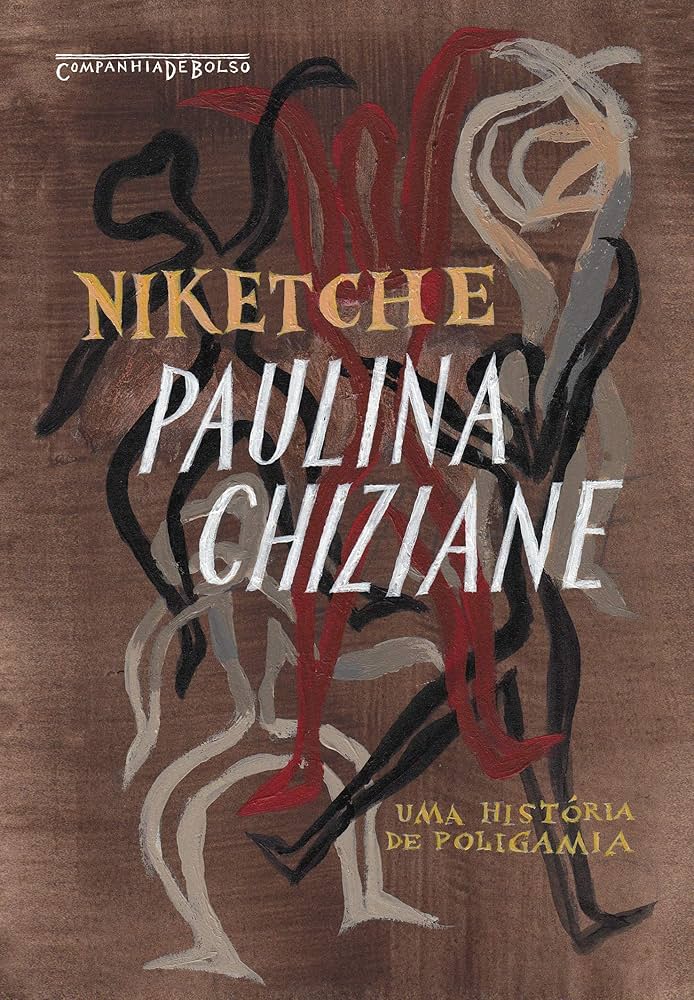
Niketche: A Story of Polygamy was written by Paulina Chiziane, an author from Mozambique, in 2002. It tells the story of Rami, a middle-aged woman who has a husband, Tony, that hardly stays at home and it's always away. She starts thinking he might have an affair and starts to investigate. To her surprise, he doesn't have only one affair... he has five! Her relationship was far from a love triangle, but in her own words, it was a love hexagon.
Her first instict was to fight with the other mistress, but she ends up reflecting on the suffering all these women go through because of a cheating man and they decide to unite. If alone they are weak, together they are stronger. They embrace the polygamy and start demanding Tony the duties of a husband to all 5 women, instead of disappearing from all of their lives unexpectedly.
The book is a romance with pints of drama and comedy, but to the core, it is a reflection on what it means to be a woman in the traditional country of Mozambique, with expectations of gender, inequality, and all the suffering the society puts on women since the day they were born -- my, even before, with the looks of deception when people find out a pregnant woman is not having a boy, but a girl, this "lesser version of a human".
For me, this book was really good at portraiting the small, but hurtful parts of being a woman. How much they are silenced, hurt, and undervalued even before they are born is beyond comprehension, and throughout the whole reading you get this really sour taste in your mouth. You feel deep sympathy for Rami and for a few of the other women (the other mistresses), and oh my god, such great hate for Tony, the cheating husband. He is rude, selfish, and explosive. He for sure does not deserve all of the care all of his women give him.
I'll be honest, this is a great book in my opinion, but I would not recommended it to everyone. The language is descriptive, but poetic, and the situations are sour, really sour. I would recommend this book to whoever is interested in reflections of gender, African stories, culture, and religion, and who has a little bit of experience in reading high literature.
I give 4 stars out of 5 for the story, the plot, the poetic language, and the strength of the narrative to keep you engaged not only in the narrative sense, but also in the emotional sense. I don't give 5 out of 5 because my criteria for a 5 star book is: to love the book so much I wouldn't stop talking about it, recommended it to everyone (or many people), and definitely wanting to read again in a few years. I really liked Niketche, but I wouldn't recommended it to everyone and I don't plan to re-read it anytime soon, for the sake of all the other books on my list!